Want a Dallas home you can lock, leave, and love coming back to? If you travel often or just want less upkeep, Uptown’s condo scene gives you a secure, walkable base with services that make life simple. In this guide, you’ll learn why Uptown fits a lock-and-leave lifestyle, what building types and amenities to look for, how HOA fees and insurance work, a quick market snapshot, and a practical checklist to use before you buy. Let’s dive in.
Why Uptown fits lock‑and‑leave life
Uptown sits just north of Downtown Dallas and blends high‑rise living with restaurants, retail, and parks in a compact, walkable district. The neighborhood is promoted by Uptown Dallas, Inc., which supports area events and private security patrols.
Many Uptown addresses score in the mid‑90s on Walk Score, which means you can handle errands, meet friends, and exercise on foot. The [Katy Trail] is right nearby, and the free McKinney Avenue M‑Line trolley adds a car‑optional layer to your commute. Uptown is widely considered a Walker’s Paradise, according to Walk Score’s Uptown page.
If you are a busy professional or a downsizer, you will find buildings with concierge services, secure parking, and robust building operations. Those features make it easy to lock the door and head to the airport with confidence.
What you will find in Uptown condos
Full‑service luxury towers
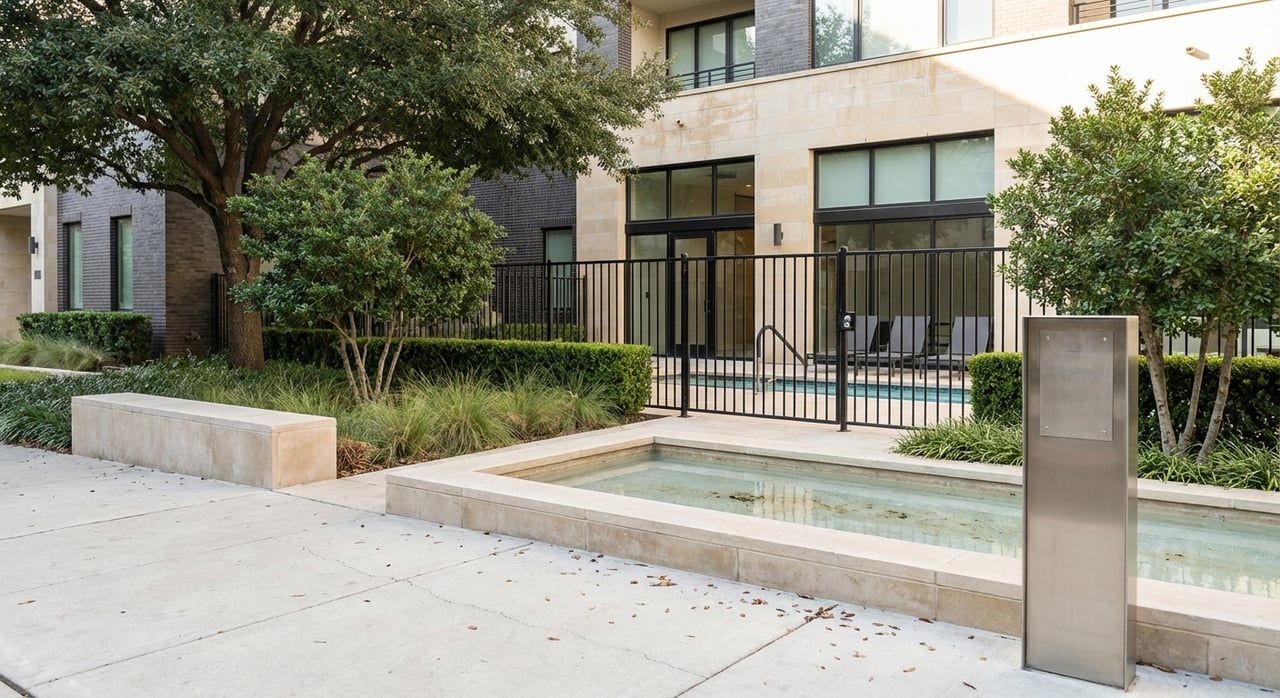
High‑rise towers often include 24/7 concierge, staffed security, valet or managed parking, package rooms, gyms, spas, lounges, and resort‑style pools. Buildings like Bleu Ciel showcase that full‑service experience, which is ideal if you value on‑site help for deliveries, guests, and maintenance.
Boutique mid‑rises and loft conversions
Smaller buildings may offer secure entry, a fitness room, a rooftop deck, and limited front‑desk hours. Lofts like 1999 McKinney are known for unique floor plans and a more intimate scale. These properties can feel more personal while still supporting a lock‑and‑leave routine.
Townhomes and brownstones
Townhomes near State‑Thomas and along McKinney Avenue typically include private entries and attached garages. You get a residential feel and walkability, though you may trade away staffed services like a full‑time concierge.
Lock‑and‑leave amenity checklist
- 24/7 secure entry and front desk or concierge
- On‑site management and responsive maintenance
- Valet or deeded, reserved garage parking
- Package lockers or a staffed package room
- Fitness center and pool to replace off‑site memberships
- Guest suites or flexible guest parking
- Owner storage options and pet facilities
- Backup power for common systems
HOA, insurance, and rules you must review
HOA fees: what to expect
Monthly condo assessments vary by building size, services, and reserves. In Uptown, smaller or lower‑amenity buildings can land in the low hundreds per month, mid‑amenity buildings often range around the mid‑hundreds to roughly $400 to $800 per month, and luxury towers with full services can exceed $1,000 monthly. Many buyers use a rough per‑square‑foot guideline to compare buildings, but you should confirm the exact fee and what it covers before you commit.
What fees typically cover
Common line items include building insurance for common areas, exterior and amenity upkeep, landscaping, concierge and security staffing, trash service, and sometimes water. What varies: which utilities are included, parking arrangements, pest control, and storage. Review the resale certificate and association documents to confirm what you are paying for under Texas law.
Master policy vs. your HO‑6 policy
Your association carries a master insurance policy that covers common elements and, depending on the policy, some or all original interior finishes. You are responsible for an HO‑6 condo policy to protect interior improvements, personal property, liability, and loss‑assessment coverage. Learn the basics in this HO‑6 insurance guide, then get a quote while you are under contract.
Your Texas document rights and timeline
Texas’s Uniform Condominium Act outlines your right to disclosures and access to records that affect your decision. You can review the statute in Texas Property Code Chapter 82. The resale certificate must include key items like the current budget, unpaid assessments, reserves, and pending suits, and the association must provide it within ten days of a written request. See the 10‑day rule in Texas Property Code §82.157.
Red flags for lock‑and‑leave buyers
- Very low reserves or a pending special assessment
- Major litigation involving building systems
- High delinquency on dues or frequent management turnover
- Restrictive rules that complicate absentee ownership
Market snapshot and nearby comparisons
Recent reports show different medians due to varying boundaries and data sets. For Uptown, Redfin reported a median sale price of about $625,000 for January 2026, while Realtor.com showed a median of about $584,900 for December 2025. Entry points for some older or smaller condos can start in the low $300,000s, while newer or larger residences in full‑service towers reach into the multi‑million range. In practice, many Uptown condos trade in the $400,000 to $1.5 million band based on floor, view, and amenities.
For context, Oak Lawn often shows similar or slightly lower medians on some data providers, reflecting a wide mix of condos and townhomes. Turtle Creek skews to established luxury towers near green space and can command higher prices in prime buildings. Your choice comes down to lifestyle: Uptown emphasizes walkable mixed‑use convenience and many newer high‑rises, Oak Lawn offers variety and nightlife, and Turtle Creek delivers a park‑centric feel with legacy luxury addresses.
Your lock‑and‑leave buyer checklist
Use this due‑diligence checklist to confirm that a building truly fits your lifestyle and risk tolerance.
A) Documents to request early
- Resale certificate and estoppel letter. Texas associations must furnish a resale certificate within ten days of a written request. See Texas Property Code §82.157.
- Current operating budget, latest financials, most recent reserve study, and delinquency report.
- Board meeting minutes for the past 12 to 24 months, the management contract, key vendor agreements, and the master insurance declarations.
- CC&Rs, bylaws, and rules covering rentals, parking, pets, storage, and move‑in procedures.
B) Questions for the HOA or manager
- Financial health: How is the reserve funded, and are any special assessments planned in the next 12 months?
- Insurance: What does the master policy cover, and what is the master deductible? What interior items must owners insure?
- Operations: Which utilities and services are included in the monthly assessment, and what are concierge or front‑desk hours?
- Rentals: Are rentals permitted? Are short‑term rentals allowed or restricted, and have there been any STR violations?
C) Lock‑and‑leave practical checks
- Tour the package handling area and confirm how deliveries are stored during longer trips. Full‑service buildings like Bleu Ciel highlight this in their operations.
- Confirm parking details. Is your space deeded or assigned, and what are the guest parking rules?
- Identify the on‑site emergency contact and access procedures when you are out of town.
- Ask about any routine in‑unit maintenance or inspection options for vacant periods so you can plan ahead.
D) Insurance and lending alerts
- Get HO‑6 quotes during your option window and price loss‑assessment coverage in case the association’s deductible is high. Use the HO‑6 primer to frame questions for your insurer.
- Ask your lender about condo project eligibility. Some properties must meet Fannie Mae, Freddie Mac, or FHA standards. Projects with high rental ratios, litigation, or weak reserves can be non‑warrantable, which limits loan options. Review Fannie Mae’s condo eligibility guidance with your lender.
E) Short‑term rental context in Dallas
The City of Dallas adopted an STR ordinance process in 2023 under Chapter 42B that set registration and zoning rules. You can read the legislative file on the city’s site here. Implementation has seen ongoing litigation and enforcement changes, as covered by local reporting like the Dallas Observer’s STR coverage. Many condo associations also restrict or prohibit STRs, so verify both city rules and your building’s documents.
F) When to slow or stop
- A large pending special assessment or very low reserves
- Significant lawsuits tied to structure, water intrusion, or mechanicals
- Repeated management turnover and weak vendor oversight
How a local advisor helps you win
Lock‑and‑leave living works best when the building’s operations match your travel schedule and risk comfort. A local, concierge‑style approach helps you verify the right documents, read between the lines on reserves and insurance, and weigh Uptown against Oak Lawn or Turtle Creek based on how you plan to live day to day. If you want a streamlined search and a calm, informed process from first tour to closing, reach out to Jeremy Whiteker for neighborhood‑first, high‑touch guidance.
FAQs
What makes Uptown ideal for lock‑and‑leave condo living?
- Walkability, secure buildings with concierge services, and transit options like the M‑Line trolley support a low‑maintenance, car‑optional lifestyle according to Walk Score and Uptown Dallas, Inc..
How much are typical HOA fees for Uptown condos?
- Fees range widely by building and services. Lower‑amenity buildings can be in the low hundreds monthly, mid‑amenity options around $400 to $800, and luxury towers often exceed $1,000 per month.
What is an HO‑6 condo policy and why do you need it?
- An HO‑6 insures your interior finishes, personal property, and liability, and it can include loss‑assessment coverage that fills gaps in the condo master policy; see this HO‑6 guide.
Are short‑term rentals allowed in Uptown Dallas condos?
- It depends on both city rules and your association’s documents. Review Dallas’s Chapter 42B legislative file and confirm your building’s CC&Rs and rules.
What must be in a Texas condo resale certificate?
- Texas Property Code Chapter 82 requires disclosures like budgets, unpaid assessments, reserves, and pending suits, and the association must provide the certificate within ten days of a written request; see §82.157.
Do lenders approve every Uptown condo project?
- No. Some projects are non‑warrantable due to rentals, litigation, or weak reserves, which can limit loan choices. Ask your lender and review Fannie Mae’s condo standards.